Decoding Milky Soda: A Practical Guide to Playful Display Typography
In the vast landscape of digital design, selecting the right typeface is often a balancing act between aesthetic appeal and functional clarity. For projects centered around creativity, education, or youth-oriented content, the stakes are different. The font must not only be legible but also evoke a specific emotional response. This is where Milky Soda enters the conversation as a distinctive option for designers seeking to capture a sense of whimsy without sacrificing readability. It is not merely a decorative element; it is a tool that embodies playfulness and authenticity, making it a compelling choice for children's activities and school projects.
Understanding the Distinctive Character of Milky Soda
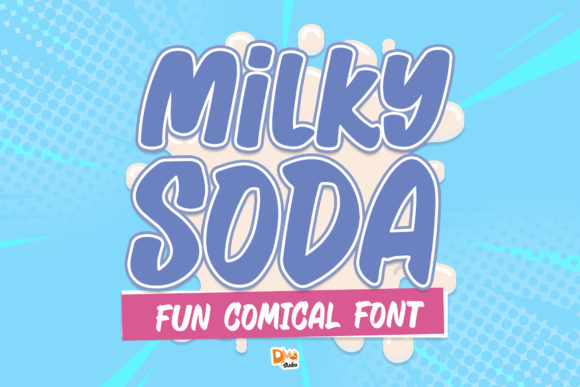
To evaluate whether this typeface fits your specific needs, one must first understand its visual DNA. Unlike standard serif or sans-serif fonts that prioritize neutrality, Milky Soda is a display font designed to make an immediate impression. Its most defining characteristic is the "paint brushed" effect. The strokes vary in thickness, mimicking the natural flow of a brush dipped in liquid pigment. This creates a texture that feels organic and hand-crafted rather than rigidly generated by software algorithms.
The name itself suggests a certain effervescence and lightness, which translates well into the letterforms. The letters appear soft and approachable, lacking the sharp, intimidating edges found in many technical or corporate typefaces. This distinctiveness is crucial for projects aiming to lower barriers to entry for young audiences. When a child sees text that looks like it was painted with joy, they are more likely to engage with the material. The font successfully bridges the gap between professional design quality and the spontaneous energy of a classroom art project.
Visual Attributes and Emotional Resonance
- Organic Flow: The variable stroke widths create a dynamic rhythm that guides the eye naturally across headlines and titles.
- Authenticity: By simulating manual application, the font avoids the sterile perfection of vector-based designs, adding a layer of human touch.
- Playful Geometry: While playful, the underlying structure remains sound enough to ensure characters are distinguishable from one another.
This combination makes Milky Soda particularly effective when the goal is to communicate fun and accessibility. It signals to the viewer that the content within is lighthearted and inviting. However, this same characteristic requires careful consideration regarding context. A font that screams "fun" may undermine authority in settings where seriousness is paramount.
Evaluating Fit: Where Milky Soda Excels
When comparing typography options for educational or recreational materials, designers often face a tradeoff between style and utility. Milky Soda occupies a unique niche where high-energy styling meets practical usability. It is not a monospaced font meant for coding, nor is it a condensed font intended for dense data tables. Its primary domain is visual communication where attention-grabbing headlines are essential.
For children's activities, such as coloring sheets, activity books, or craft instructions, this font serves a dual purpose. It acts as a visual cue that the task ahead is enjoyable. In these scenarios, the paint-brushed aesthetic can stimulate creativity, encouraging children to see the written word as part of the artistic experience rather than just a set of instructions. Similarly, for school projects, it offers a way for students to present their work with personality. Whether designing a poster about local wildlife or creating a timeline for a history presentation, Milky Soda allows the content to stand out without requiring complex graphic design skills.
The font is also well-suited for event signage related to youth programs, birthday parties, or community workshops. In these environments, the "cool" factor mentioned in its description is vital. It helps create an atmosphere that feels modern and energetic, distinguishing the event from generic templates. The authenticity of the brush strokes prevents the design from feeling dated or overly commercial, which is a common pitfall in children's media.
Navigating Tradeoffs and Limitations
While the strengths of Milky Soda are clear, a balanced evaluation requires acknowledging its limitations. No single typeface is a universal solution, and understanding when *not* to use it is just as important as knowing when to apply it. The primary constraint lies in its classification as a display font. These typefaces are optimized for large sizes and short bursts of text, such as headlines, logos, or banners. They are generally unsuitable for body copy, especially at smaller point sizes.
Attempting to set long paragraphs of text in Milky Soda can lead to visual fatigue. The varying stroke weights and organic irregularities, while charming in small doses, become distracting when read continuously. The eye has to work harder to process the inconsistent shapes, which can reduce reading speed and comprehension. Therefore, if your project involves extensive instructional text, a more neutral sans-serif font should be paired with Milky Soda to handle the bulk of the reading material.
Another consideration is the level of formality required. In contexts where trust, precision, or professionalism is the primary concern—such as medical pamphlets, legal documents, or financial reports—this font would be inappropriate. The inherent playfulness might inadvertently signal a lack of seriousness. Designers must weigh the brand voice against the medium. If the goal is to convey reliability and stability, a more structured typeface is necessary. Milky Soda excels in environments where breaking the mold is encouraged, but it falters when adherence to convention is expected.
Comparative Perspectives and Alternatives
When researching alternatives, designers often look at categories of script fonts, handwritten styles, and rounded sans-serifs. How does Milky Soda stack up against these? Script fonts often prioritize elegance or cursive flow, which can sometimes sacrifice legibility. Milky Soda retains a higher degree of clarity because it does not attempt to mimic continuous handwriting; instead, it captures the texture of individual brushstrokes. This makes it more accessible for younger readers who are still developing their decoding skills.
Rounded sans-serif fonts offer a friendly alternative, providing a similar sense of approachability. However, they often feel too uniform and manufactured compared to the textured look of Milky Soda. The "paint brushed" quality gives Milky Soda a unique identity that stands apart from the smooth curves of standard geometric fonts. It adds a layer of tactile interest that flat, rounded fonts cannot replicate.
Handwritten fonts are perhaps the closest competitors. Many claim to offer an authentic, personal touch. However, true handwriting varies wildly in consistency, which can hinder readability. Milky Soda strikes a balance by offering the *feeling* of handwriting while maintaining a consistent baseline and character spacing that ensures the text remains legible. This engineered authenticity is a key differentiator. It provides the warmth of a human touch without the chaos of actual scribbles.
Decision Factors for Your Project
Selecting the right typography ultimately comes down to aligning the font's personality with the project's objectives. Before committing to Milky Soda, consider the following decision matrix:
- Target Audience Age: Is the content specifically for children or families? If yes, the playful nature is a strong asset.
- Text Volume: Will this font be used for headlines only, or will it need to carry heavy body text? If the latter, plan to pair it with a neutral companion font.
- Tone of Voice: Does the brand or message require a serious, authoritative stance? If so, avoid this font entirely.
- Medium of Delivery: Is the output primarily print (posters, worksheets) or digital (web headers, app icons)? Milky Soda performs exceptionally well in both, provided the resolution is sufficient to render the brush details clearly.
By carefully evaluating these factors, you can determine if the cool, paint-brushed aesthetic of Milky Soda is the right fit. It is a powerful tool for injecting life into static designs, transforming ordinary school projects and activity guides into engaging experiences. However, it should be wielded with intention. When used correctly, it enhances the user experience by creating an emotional connection. When used indiscriminately, it risks overshadowing the content it is meant to support.
Ultimately, the choice of typography is a strategic decision that influences how information is perceived. Milky Soda offers a vibrant, authentic option for those looking to break away from the mundane. Its ability to embody playfulness makes it a standout candidate for creative endeavors, provided the designer respects its limitations and applies it within the appropriate context. Whether you are designing a curriculum, planning a party, or creating educational resources, understanding the nuances of this font ensures that your final product is both visually striking and functionally effective.