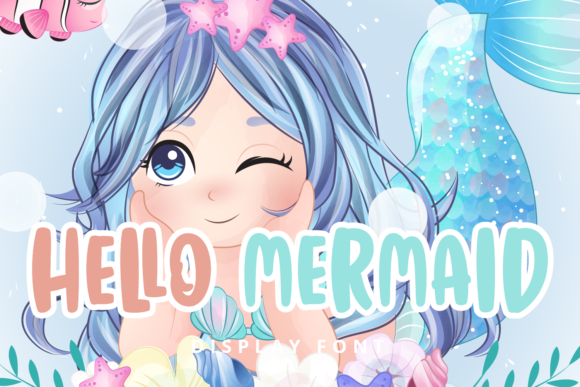
Hello Mermaid: The Playful Font That Needs a Little Guidance
Hello Mermaid is more than just another cute display font; it is a whimsical, slightly quirky character that can instantly brighten up your designs. When you add this typeface confidently to your projects, the results are often delightful. However, while its playful nature is its greatest strength, that same personality can become a liability if applied without thought. Many creators assume that because a font looks fun, it will automatically work for any project involving children, parties, or casual branding. This assumption is where things often go wrong.
The reality is that Hello Mermaid demands respect and strategic placement. It is not a neutral tool like a standard sans-serif; it carries an emotional weight and a distinct visual voice. If you treat it as a generic "fun" option rather than a specific design element, you risk undermining your message, confusing your audience, or creating a presentation that feels amateurish. Understanding the nuances of this font is the difference between a design that charms and one that feels chaotic.
The Trap of Overusing Whimsy
One of the most common mistakes designers make with Hello Mermaid is assuming it works everywhere a touch of playfulness is needed. Because the letters are rounded and bouncy, there is a natural temptation to use it for headlines, body text, and even technical data tables. While it might look charming in a small logo for a birthday party, using it for a financial report or a serious educational manual is a critical error. The font's inherent quirkiness can distract readers from the actual content, making important information feel trivial or untrustworthy.
When you apply a display font like Hello Mermaid to long blocks of text, readability suffers significantly. The varying stroke widths and decorative elements create visual noise that forces the eye to work harder. This leads to user fatigue and a poor reading experience. Instead of engaging your audience, you are inadvertently pushing them away. A professional approach involves reserving this typeface strictly for short phrases, titles, or accent words where its personality can shine without overwhelming the layout.
To avoid this pitfall, always ask yourself: does this project need a friendly vibe, or does it need clarity? If the answer leans toward clarity, stick to a clean, legible font for the main body. Use Hello Mermaid only to break up the monotony or to highlight key emotional beats. Think of it as a spice in a recipe; a little bit enhances the flavor, but too much ruins the dish entirely.
Pairing Pitfalls and Contrast Issues
Another area where users frequently stumble is in pairing Hello Mermaid with other typefaces. Because this font is so distinctive, it requires a partner that provides balance. A common mistake is trying to pair it with another decorative or script font. When two busy fonts compete for attention, the result is a cluttered, messy design that lacks hierarchy. The viewer does not know where to look first, which dilutes the impact of your message.
The best approach is to pair Hello Mermaid with something simple and understated. A clean sans-serif or a classic serif font acts as a perfect foil, grounding the whimsical energy of the mermaid theme. For example, using Hello Mermaid for a headline paired with a crisp, neutral font for the subheadings creates a professional yet inviting look. This contrast ensures that the playful font remains the star of the show without stealing the spotlight from the information you are trying to convey.
Consider the context of your project. If you are designing a menu for a seaside restaurant, Hello Mermaid fits perfectly alongside a nautical-themed image. However, if you are creating a flyer for a community workshop, the same font might make the event seem less organized. Always check the overall tone of your brand before committing to this typeface. Does it align with your values? If your brand is about reliability and precision, Hello Mermaid might be too informal unless used very sparingly.
Evaluating Legibility at Small Sizes
Many users download Hello Mermaid and immediately try to scale it down for social media icons or small mobile captions. This is a frequent oversight that can ruin the effectiveness of your design. Display fonts often rely on larger sizes to showcase their unique details. When shrunk too small, the curves can merge, and the quirky features can become indistinct blobs of ink. This loss of detail makes the text hard to read and the design look low-quality.
If you plan to use this font across various media, test it rigorously at different sizes. Check how it looks on a smartphone screen versus a large banner. You may find that while it looks fantastic on a poster, it becomes illegible on a business card. In such cases, consider using a simplified version of the font or switching to a more robust typeface for smaller applications. Never sacrifice readability for style; if the audience cannot read it quickly, the design has failed its primary purpose.
Making the Right Choice Before You Download
Before you incorporate Hello Mermaid into your workflow, take a moment to evaluate the licensing and file formats available. Some free versions of fonts come with restrictions on commercial use, which can lead to legal issues later if you sell a product or service featuring the design. Ensure you have the correct license for your intended use, whether it is for personal hobbies or a full-scale business campaign.
Additionally, look at the kerning and spacing provided by the font creator. Display fonts sometimes have uneven spacing that requires manual adjustment to look professional. If you do not adjust the letter spacing, words might appear too tight or too loose, disrupting the flow of your text. Taking the time to tweak these settings can elevate a good design to a great one. It shows attention to detail and a commitment to quality that your audience will appreciate.
Ultimately, Hello Mermaid is a wonderful asset for anyone looking to inject joy and creativity into their work. By avoiding the traps of overuse, poor pairing, and ignoring size limitations, you can ensure that your designs remain effective and engaging. Use this font with confidence, but always with a clear strategy. When you understand its strengths and weaknesses, you will love the results and create work that truly stands out.