Lost Dragon: A Comprehensive Evaluation of a Whimsical Display Typeface
In the vast and often overwhelming landscape of digital typography, selecting the right typeface is rarely about finding the most popular option; it is about identifying the tool that best bridges the gap between a concept and its visual realization. For designers, illustrators, and content creators seeking to inject personality into their work, Lost Dragon has emerged as a distinctive contender. It is not merely another font file in a library; it is a specific aesthetic choice defined by its curly, whimsical nature.
This evaluation explores the functional utility of Lost Dragon, analyzing how its unique characteristics fit into professional workflows. By examining its distinct features, potential applications, and tradeoffs compared to more conventional display options, we can determine when this font serves as an incredible asset and when a different approach might be warranted.
Understanding the Distinct Character of Lost Dragon
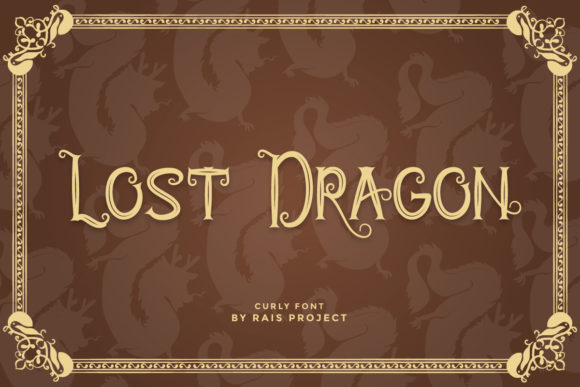
To evaluate any design resource effectively, one must first understand its core DNA. Lost Dragon is categorized primarily as a display font, meaning it is optimized for large sizes rather than body text. Its defining characteristic lies in its "curly" structure. Unlike geometric sans-serifs or traditional serif fonts that rely on straight lines and predictable angles, Lost Dragon introduces organic curves and playful flourishes to every letterform.
The whimsy inherent in Lost Dragon suggests a narrative quality. When a designer selects this typeface, they are immediately signaling a tone that is imaginative, lighthearted, and perhaps slightly nostalgic. The letters appear to have movement, as if they were drawn by hand with a flexible nib rather than constructed with rigid grid tools. This distinction makes it stand out in a market saturated with clean, minimalist, and corporate-ready typefaces.
For a user building a portfolio or creating marketing materials, the decision to use Lost Dragon is a statement of intent. It transforms standard headlines into visual hooks. However, this distinctiveness comes with a responsibility to ensure the content matches the form. The font's personality is so strong that it demands attention, which can be both its greatest strength and its primary limitation depending on the context.
The Mechanics of Whimsy in Digital Design
What makes Lost Dragon particularly versatile within a library is how it balances readability with artistic flair. While some decorative fonts sacrifice legibility entirely for style, Lost Dragon maintains a structural integrity that allows it to function in real-world scenarios. The curves are deliberate, guiding the eye through the word without causing confusion.
When comparing this to other whimsical styles, such as handwriting scripts or comic book fonts, Lost Dragon occupies a middle ground. It lacks the chaotic energy of a graffiti tag but possesses more character than a standard rounded sans-serif. This balance allows it to elevate a creation without overwhelming the viewer. Whether used for a book cover, a festival poster, or a social media graphic, the font provides a level of polish that feels intentional rather than accidental.
Navigating Alternatives and Market Categories
When researching fonts, professionals rarely look at a single option in isolation. The decision-making process usually involves comparing Lost Dragon against similar categories of display fonts. Understanding these alternatives helps clarify exactly where Lost Dragon fits in the broader ecosystem of design resources.
- Handwritten Scripts: Many designers turn to script fonts to achieve a personal touch. However, scripts often require cursive connections and can be difficult to read at small sizes. Lost Dragon offers the warmth of a handwritten feel without the strict rules of cursive, making it more robust for varied layouts.
- Retro and Vintage Styles: Fonts from the 70s or 80s often feature bold curves and distinct shapes. While retro fonts evoke a specific era, Lost Dragon leans more towards a timeless, storybook whimsy. It avoids the dated feel that some vintage options might carry, keeping the design feeling fresh and modern.
- Geometric and Rounded Sans-Serifs: These are common alternatives for friendly branding. They offer softness but lack the intricate details found in Lost Dragon. If a project requires a subtle friendliness, a rounded sans-serif might suffice. However, if the goal is to create a memorable brand identity with high visual impact, Lost Dragon provides the necessary depth.
The comparison highlights that Lost Dragon is not a replacement for functional UI fonts or serious corporate headers. Instead, it competes in the niche of creative display type. In this space, the competition is fierce, and the choice depends heavily on the desired emotional resonance. Does the project need to feel like a modern tech startup, or does it need to feel like a magical adventure? Lost Dragon clearly answers the latter.
Evaluating Strengths and Tradeoffs
No design tool is perfect, and understanding the limitations of a font is just as important as knowing its capabilities. When considering adding Lost Dragon to your toolkit, it is essential to weigh its strengths against its potential drawbacks.
Strengths:
The primary advantage of Lost Dragon is its ability to capture attention instantly. In a scrolling feed or a crowded marketplace, a headline set in this font acts as a visual anchor. Its curly lines break up the monotony of rectangular blocks of text, adding dynamic rhythm to the page layout. Furthermore, because it is a display font, it scales well across various mediums, from mobile screens to large-format prints, maintaining its legibility and charm.
Tradeoffs and Limitations:
The very qualities that make Lost Dragon engaging also restrict its usage. It is unsuitable for long-form content, paragraphs, or any text requiring high density. Using it for body copy would result in reader fatigue due to the constant visual distraction of the curves. Additionally, its whimsical nature may clash with serious or somber topics. A font designed for a children's party or a fantasy novel might feel jarring on a legal document or a medical report.
Another consideration is compatibility. While modern web standards support a wide range of formats, highly stylized fonts can sometimes present rendering challenges on older devices or specific browsers. Designers must test the font thoroughly to ensure the curls render smoothly across all target platforms.
Strategic Application and Decision Factors
Determining whether Lost Dragon is the right choice for a specific project requires a clear assessment of the goals. The decision should not be based solely on aesthetic preference but on how the font supports the message. Below are key scenarios where this font excels versus situations where an alternative is advisable.
Ideal Use Cases for Lost Dragon
This font shines in contexts where storytelling and imagination are paramount. Consider a book cover for a fantasy novel; the curly lines can mimic vines, smoke, or ancient runes, perfectly setting the mood before the reader even opens the book. Similarly, for event branding—such as music festivals, art exhibitions, or creative workshops—Lost Dragon adds a layer of excitement and exclusivity.
It is also effective in packaging design for products targeting families or hobbyists. Think of craft kits, artisanal candies, or toy boxes. The whimsical nature of the font aligns with the joy and creativity associated with these products. In these instances, Lost Dragon acts as an incredible asset, elevating the perceived value of the product through thoughtful typography.
When to Choose Another Option
Conversely, there are clear boundaries where Lost Dragon should be avoided. If the objective is to convey authority, stability, or efficiency, this font works against those goals. A financial institution, a law firm, or a healthcare provider would likely find the playful curves of Lost Dragon inappropriate for their primary branding.
Furthermore, if the design brief calls for a minimalist or brutalist aesthetic, the ornate details of Lost Dragon would introduce unnecessary noise. In these cases, a clean, neutral typeface would allow the imagery and content to take center stage without competition from the typography itself.
Integrating Lost Dragon into Your Workflow
For professionals looking to expand their resources, integrating Lost Dragon requires a strategic approach. It is not enough to simply download the file; one must understand how to pair it effectively. Typography is rarely about using a single font in isolation. The magic often happens in the contrast between the display font and a complementary secondary typeface.
A practical strategy is to pair Lost Dragon with a simple, understated sans-serif or a classic serif for body text. This creates a hierarchy where the headline grabs attention with its whimsy, while the supporting text ensures clarity and readability. This combination leverages the strengths of both styles, allowing the designer to tell a complete story.
Additionally, consider the color palette. The curly lines of Lost Dragon interact differently with solid colors versus gradients or textures. Testing the font against various backgrounds will reveal how the curves behave in different lighting conditions and screen environments. This testing phase is crucial for ensuring the final output meets professional standards.
Conclusion: Making an Informed Choice
Selecting a typeface is a critical component of the design process, influencing everything from user engagement to brand perception. Lost Dragon stands out as a specialized tool in the designer's arsenal, offering a unique blend of curly aesthetics and whimsical charm. It is not a universal solution, nor is it intended to be. Rather, it is a powerful resource for specific moments that demand creativity and personality.
By understanding its distinct characteristics, comparing it thoughtfully against alternatives, and recognizing its limitations, professionals can make informed decisions about when to deploy it. When used correctly, Lost Dragon has the potential to elevate any creation, turning a standard layout into a memorable visual experience. For those willing to embrace its playful nature, it remains an invaluable addition to any fonts library.